Harvard Fires Slavery Research Team After Identifying 900 Enslaved People
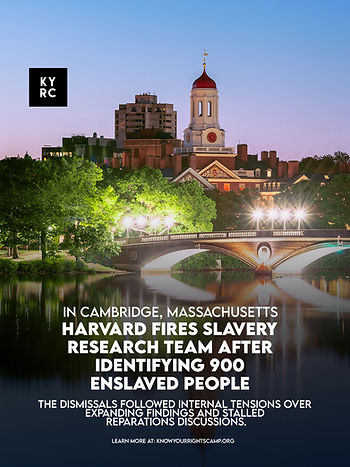
Harvard University's handling of its slavery legacy research reveals a troubling pattern of suppression and retaliation that betrays the institution's 2022 commitment to openness and accountability. Christopher Newman, a Howard University doctoral student interning with Harvard University Archives, was escorted off campus by police, banned, and denied access to his belongings after simply suggesting the university investigate its ties to Antigua. His crime, in his own words, was "asking too many questions, veering off of the proverbial beaten path."
Newman's dismissal fits a broader pattern of Harvard silencing scholars who dig too deep. Researcher Richard Cellini and his entire team were fired without explanation after identifying more than 900 enslaved people and nearly 500 living descendants, numbers that dwarf the university's initial acknowledgment of just 70 enslaved people. Cellini believes Harvard feared finding "too many slaves" and potential bankruptcy through reparations.
The evasion appears deliberate. Caitlin DeAngelis, hired in 2017, documented over 200 enslaved people at one Harvard overseer's Antiguan plantation, yet none appeared in the final report, which claimed the number was unknown. "My role was to hold down a desk that allowed Harvard to mislead the press about how serious they were about making reparations," she said. Professor Carla Martin called the Legacy of Slavery Initiative "window dressing" that is "more performative than substantive."
Harvard's treatment of Antigua is particularly damning. For nearly a decade, Antiguan officials, including ambassadors and the prime minister, have sought dialogue about reparations. Prime Minister Gaston Browne called Harvard's failure "shocking if not immoral." Despite Harvard's enormous $50 billion endowment and documented profits from Caribbean slavery, its only concrete offering has been discounted online business courses at a 10-20% reduction.
History professor Vincent Brown resigned, asking pointedly: "Is it true that the university does not really want to know the whole truth about its history of slave ownership in the Caribbean?" He felt he was "sacrificing my scholarly reputation to stay on a project that didn't have scholarship as its priority." Harvard's actions suggest the answer is yes, and that is fundamentally wrong.
Link: The Guardian


Comments